Why We Work with All Major Brands of CCTV Cameras

Why We Work with All Major Brands of CCTV Cameras

Why We Work with All Major Brands of CCTV Cameras

In today’s competitive security industry, choosing the right provider is just as important as choosing the right equipment. At Techfonet, we take a unique approach by working with all major brands of CCTV cameras. This ensures that our clients receive the most reliable, scalable, and future-ready surveillance systems available.

But why does this matter for your business or home security? Let’s break it down.

Hikvision, Dahua Technology, Axis Communications, Bosch Security Systems, Hanwha Vision, ASIS International, Security Industry Association, Uniview, and more…


1. Access to the Best CCTV Camera Brands in the Industry

One of the biggest advantages of choosing Techfonet is access to top CCTV camera brands globally. Instead of limiting you to a single manufacturer, we provide a wide range of options, including:

  • Industry-leading IP camera brands (Hikvision)
  • Trusted analog CCTV manufacturer: Dahua Technology
  • Advanced AI-powered surveillance systems

This ensures you always get the best CCTV camera system for your needs.

# CCTV camera brands, # best CCTV cameras, # top security camera brands


2. Customized Surveillance Solutions for Every Need

Security requirements vary across industries. A small office does not need the same setup as a large warehouse or shopping mall.

By working with multiple brands, Techfonet can:

  • Design custom CCTV solutions tailored to your environment
  • Offer both IP cameras and analog CCTV systems
  • Match features like night vision, AI analytics, and remote access to your needs

This flexibility ensures you get a personalized surveillance system that works perfectly.

# custom CCTV installation, # surveillance system solutions, # IP camera systems


3. Future-Ready Technology and Innovation
PoE Simplifies CCTV Installation

Technology in surveillance is constantly evolving. Different brands lead in different innovations, such as:

By partnering with all major brands, Techfonet ensures your system includes the latest smart surveillance technology and remains future-ready.

# smart CCTV systems, # AI security cameras, # future-ready surveillance


4. Better Pricing and Flexible Options

Working with multiple CCTV brands allows Techfonet to provide:

  • Competitive pricing across different product categories
  • Budget-friendly options without sacrificing quality
  • Premium systems for high-security environments

This means you get the best value for your investment, whether you need a basic setup or an enterprise-level system.

#affordable CCTV cameras, # cost-effective surveillance systems, # CCTV installation cost

Hikvision, Dahua Technology, Axis Communication, Bosch Security Systems, Hanwha Vision, ASIS International, Security Industry Association, Uniview


5. Easy Integration and System Scalability

Already have an existing CCTV system? No problem.

Techfonet’s multi-brand expertise ensures:

  • Seamless integration with existing cameras and systems
  • Easy upgrades from analog to IP camera systems
  • Scalable solutions that grow with your business

This makes your surveillance system flexible and adaptable for future expansion.

# scalable CCTV systems, # CCTV upgrades, # IP camera installation


6. Reliable Performance and Trusted Quality

We only partner with trusted CCTV camera brands known for:

  • High durability and long lifespan
  • Consistent performance in all conditions
  • Strong manufacturer support and updates

This guarantees that your security system is reliable when it matters most.


7. Unbiased Expert Recommendations

Unlike providers tied to a single brand, Techfonet offers:

  • Honest, unbiased advice
  • Recommendations based on your actual needs
  • Professional guidance from experienced security experts

Our goal is not to sell a brand—but to deliver the best surveillance solution for you.


Why Choosing a Multi-Brand CCTV Provider Matters

When you choose a provider that works with only one brand, your options are limited. But with Techfonet, you benefit from:

  • Greater flexibility
  • Access to better technology
  • More competitive pricing
  • Customized and scalable solutions

This is why more businesses and homeowners are choosing multi-brand CCTV providers for their security needs.


Conclusion: The Techfonet Advantage

Working with all major CCTV camera brands allows Techfonet to deliver:

  • The best CCTV camera systems on the market
  • Tailored solutions for homes and businesses
  • Advanced, future-ready surveillance technology
  • Scalable and cost-effective security systems

👉 With Techfonet, you’re not limited by brand—you’re empowered by choice, quality, and innovation. contact us

    #Techfonet #CCTVCameras #SecuritySystems #SmartSurveillance #IPCameras
    Why IP Cameras Are Better Than Analog Cameras: The Buyer’s Guide to Future-Ready Surveillance

    Why IP Cameras Are Better Than Analog Cameras: The Buyer’s Guide to Future-Ready Surveillance

    Why IP Cameras Are Better Than Analog Cameras

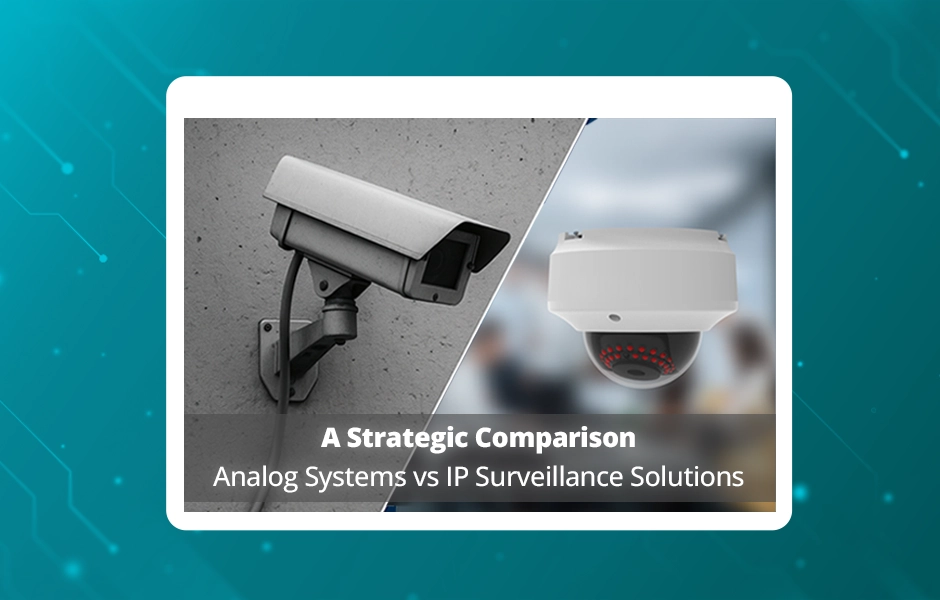
    In today’s security-conscious world, choosing the right surveillance system is more important than ever. Whether you’re securing a home, office, warehouse, or retail space, understanding the difference between IP cameras vs. analog cameras is key to making a smart investment and decision.

    This comprehensive buyer’s guide explains why IP cameras are better than analog cameras and why they are the foundation of a future-ready surveillance system.


    What Are IP Cameras and Analog Cameras?

    Before diving into the benefits, let’s clarify the basics:

    • Analog Cameras (CCTV): Traditional surveillance systems that transmit video via coaxial cables to a DVR (Digital Video Recorder).
    • IP Cameras (Internet Protocol Cameras): Digital cameras that send video data over a network, enabling advanced features and remote access.

    When comparing IP cameras vs. analog cameras, IP technology clearly leads in performance, flexibility, and scalability.


    1. Higher Resolution and Superior Image Quality

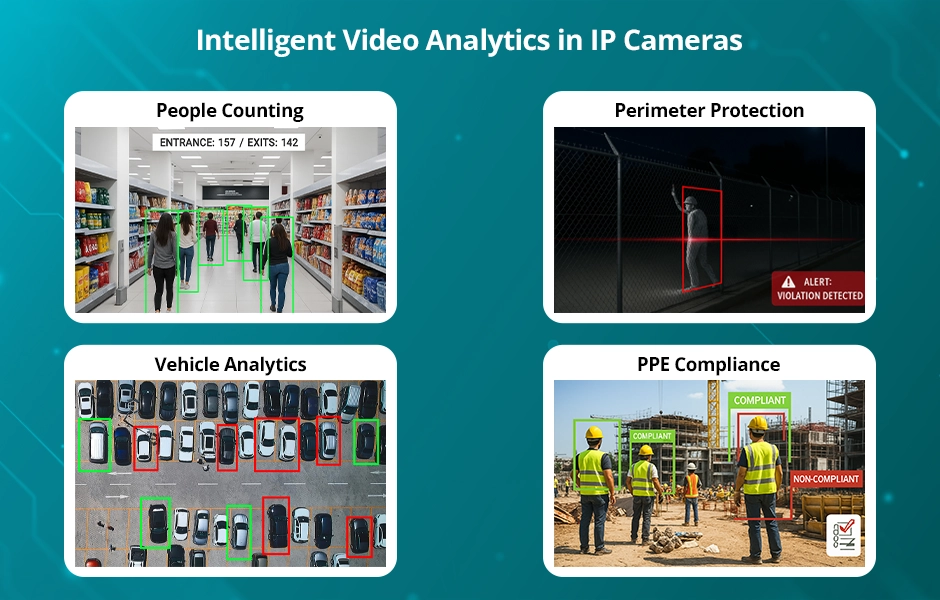
    AI and Intelligent Video Analytics

    One of the strongest reasons IP cameras are better than analog cameras is their unmatched video quality.

    IP cameras provide:

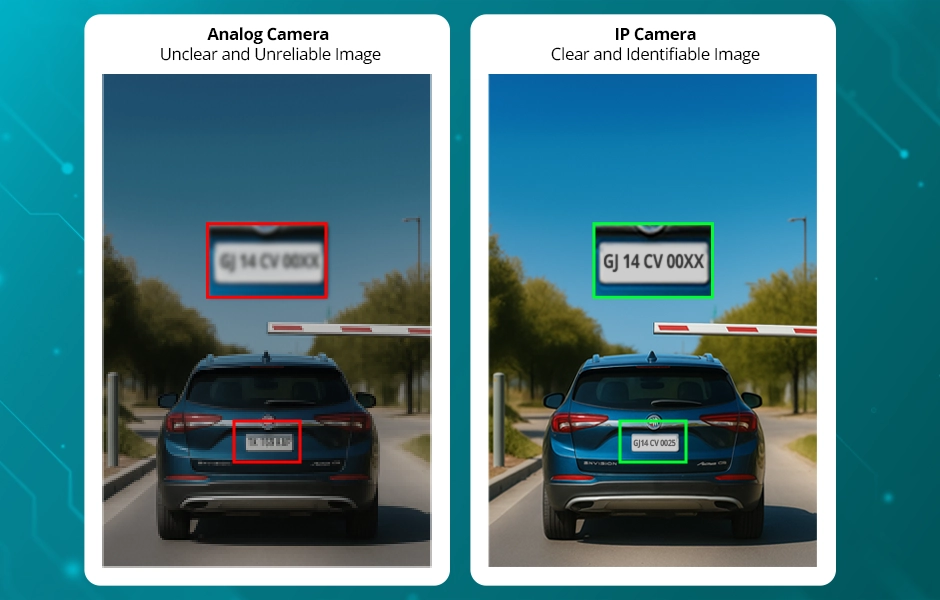
    • HD, Full HD, 4K, and even 8MP+ resolution
    • Clearer images for facial recognition and license plates
    • Better digital zoom without pixelation

    This level of detail is essential for effective surveillance and evidence collection

    # high-resolution IP cameras # clear surveillance footage # IP camera benefits


    2. Remote Access and Smart Monitoring

    With IP cameras, you can monitor your property anytime, anywhere.

    Key advantages include the following:

    • Live viewing on smartphones, tablets, and PCs
    • Instant alerts for suspicious activity
    • Real-time monitoring from any location

    This makes IP cameras ideal for business owners and homeowners who need remote surveillance systems.

    # IP camera remote access # mobile surveillance # smart security systems


    3. Advanced AI and Smart Security Features

    PoE Simplifies CCTV Installation

    Modern IP cameras are designed for intelligent surveillance. Features include:

    • Motion detection with alerts
    • Facial recognition technology
    • Line crossing and intrusion detection
    • Object tracking and analytics

    These smart capabilities make IP cameras far more efficient than analog cameras, reducing false alarms and improving response times.

    # AI security cameras # intelligent surveillance systems # smart CCTV solutions


    4. Easy Installation with Power over Ethernet (PoE)

    Installation is simpler and more cost-effective with IP cameras.

    • Single Ethernet cable for power and data (PoE)
    • Reduced wiring complexity
    • Faster deployment and maintenance

    Compared to analog systems that require separate cables, IP cameras streamline the entire setup process.


    5. Scalability for Future Expansion

    A major advantage in the IP cameras vs. analog cameras comparison is scalability.

    IP systems allow you to:

    • Add more cameras easily
    • Expand across multiple locations
    • Integrate with access control and alarm systems

    This flexibility makes IP cameras a perfect future-ready surveillance system for growing businesses.

    # scalable security systems # business surveillance solutions # expandable CCTV systems


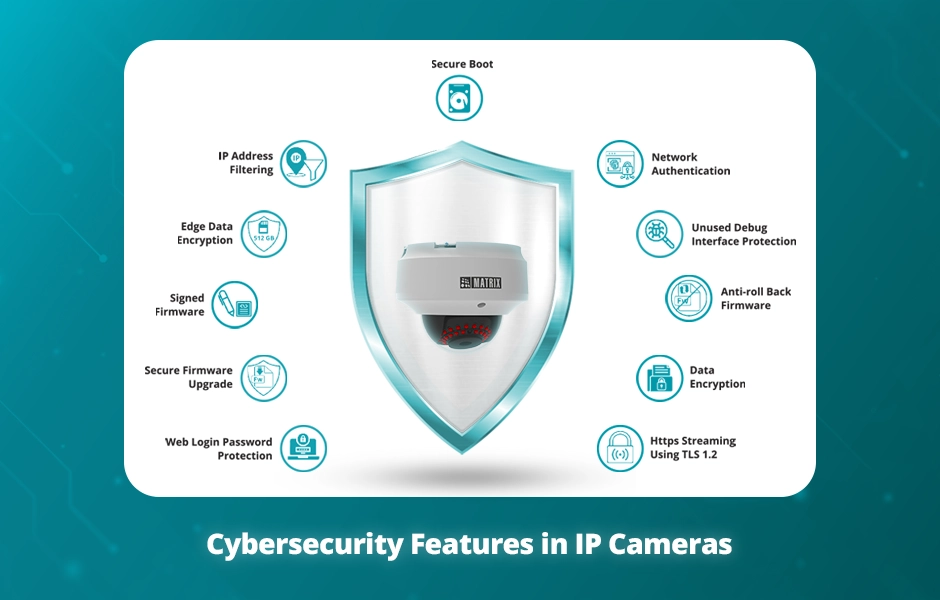
    6. Enhanced Security with Data Encryption

    IP Cameras are Cybersecure

    Security isn’t just about monitoring—it’s also about protecting your data.

    IP cameras offer:

    • Encrypted video transmission
    • Secure login authentication
    • User access control

    Analog systems lack these protections, making them more vulnerable to unauthorized access.


    7. Flexible Storage Options

    IP camera systems provide multiple storage solutions:

    • Network Video Recorders (NVRs)
    • Cloud-based storage
    • Hybrid storage systems

    This flexibility ensures your data is safe, accessible, and easy to manage.

    # cloud surveillance systems # NVR security systems # video storage solutions


    8. Better Long-Term Value and ROI

    While analog cameras may have a lower upfront cost, IP cameras offer better value over time:

    • Lower maintenance costs
    • Higher durability
    • Advanced features without frequent upgrades
    • Greater return on investment (ROI)

    For businesses and homeowners alike, IP cameras are a smarter long-term investment.


    Final Verdict: Why IP Cameras Are the Better Choice

    When evaluating IP cameras vs. analog cameras, the conclusion is clear. IP cameras provide:

    • Better video quality
    • Smart features and automation
    • Remote access and control
    • Scalability and flexibility
    • Enhanced security

    All these benefits make IP cameras the ideal future-ready surveillance solution.


    Upgrade to a Future-Ready Surveillance System today with Techfonet

    At Techfonet, we specialize in delivering cutting-edge IP camera systems tailored to your security needs. Whether you’re upgrading from analog cameras or installing a new system, our experts will guide you every step of the way.

    👉 Contact us today to install a reliable, scalable, and future-ready surveillance system that keeps your property safe.

    #IPCameras #Techfonet #SmartSecurity #SurveillanceSystems #CCTVUpgrade

    Everything You Need to Know About Door Access Control System

    Everything You Need to Know About Door Access Control System

    Everything You Need to Know About Door Access Control Systems

    Security has become a fundamental requirement for modern businesses. From protecting physical assets to ensuring employee safety and regulatory compliance, organizations increasingly rely on digital security infrastructure. One of the most important components of this infrastructure is the door access control system, which determines who can enter a facility, where they can go, and when they can access specific areas.

    The global demand for access control technologies is expanding rapidly. According to industry forecasts by MarketsandMarkets and Frost & Sullivan, the access control market has experienced strong growth, with projections indicating it would grow at a compound annual growth rate (CAGR) of around 16.9%, reaching approximately $2.1 billion in revenue within a few years.
    Another report by Fortune Business Insights estimates that the global access control market will exceed $20 billion by the end of the decade, driven by increasing concerns around workplace security, data protection, and compliance.

    At the same time, organizations are becoming more aware that traditional security methods—such as physical keys or basic card systems—are no longer sufficient. Businesses need systems that provide real-time monitoring, flexible access policies, and seamless integration with other operational technologies. This is where a modern door access control system becomes critical.

    This blog takes you on a tour to understand what a door access control system is, how it works, its key components, and what businesses should consider when selecting the right solution.

    About: Door Access Control System.

    A door access control system is a security solution that regulates entry and exit through doors by verifying a user’s identity and determining whether they are authorized to access a particular area.

    Instead of relying on traditional locks and keys, these systems use digital credentials such as

    • RFID cards
    • PIN codes
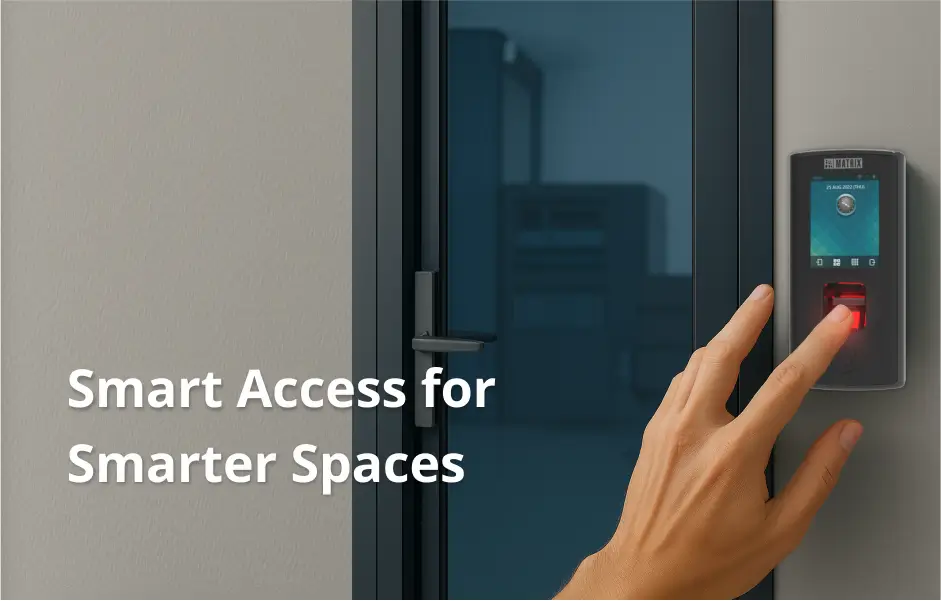
    • Fingerprint biometrics
    • Face recognition
    • Mobile credentials (Bluetooth, NFC, QR codes)

    Once a credential is presented, the system verifies it against predefined access policies. If the credentials match the rules, the door unlocks. If not, access is denied, and the event is logged.

    Modern systems also record every entry and exit event, allowing organizations to maintain detailed audit trails for security, compliance, and operational analysis.

    Why Are Smart Businesses Adopting Door Access Control Systems?

    Organizations today face multiple security challenges: unauthorized entry, insider threats, compliance requirements, and asset protection. A well-implemented door access control system helps businesses become more efficient by addressing these challenges in several ways.

    1. Enhanced Security

    Access control ensures that only authorized individuals can enter specific areas. Sensitive locations such as server rooms, laboratories, or finance departments can be restricted to selected personnel.

    2. Controlled Workforce Movement

    Access control policies can regulate who enters which zone and during what time periods. For example, employees may access office floors during working hours but not after hours.

    3. Detailed Activity Monitoring

    Every access event is recorded, creating a comprehensive log of movement inside the facility. These logs can be used for investigations, audits, or compliance reporting.

    4. Prevention of Credential Misuse

    Features such as anti-passback prevent employees from sharing their credentials with others. The system ensures that one credential cannot be used multiple times without proper exit registration.

    5. Operational Integration

    Modern access control systems can integrate with the following:

    • Time and attendance systems
    • Video surveillance
    • Fire alarms
    • Building management systems
    • Payroll software

    This creates a unified security and operational environment.

    Key Components of a Door Access Control System.

    A typical door access control system consists of several interconnected components that work together to secure entry points.

    Access Control Panel

    The control panel is the central brain of the system. It stores user credentials, processes authentication requests, and controls door operations.

    Modern access control panels are powerful computing units that manage thousands of users and multiple doors simultaneously.

    Door Controllers

    Door controllers connect individual doors to the central panel. They manage door locking mechanisms and communicate with credential readers.

    Credential Readers

    Readers capture user credentials. Depending on the technology used, they may support the following:

    New-generation readers support multiple credential types simultaneously for higher flexibility.

    Electronic Locks

    Electronic locks replace traditional mechanical locks. They open automatically once authentication is successful.

    Exit Devices

    Exit buttons or motion sensors allow people to exit controlled areas safely and easily.

    Management Software

    Management software allows administrators to configure access policies, manage users, generate reports, and monitor system activity in real time.

    Important Features to Look for in a Door Access Control System

    When selecting a door access control system, organizations should evaluate several critical features.

    Three-Dimensional Access Policies

    Advanced systems manage access based on three factors:

    • User – who is requesting access
    • Location—which door or zone is being accessed
    • Time – when access is allowed

    This model allows precise control over workforce movement.

    Real-Time Alerts and Notifications

    Modern systems generate instant notifications for security events such as unauthorized access attempts, forced doors, or device failures.

    Scalability

    A robust solution should support expansion without requiring major infrastructure changes. Some enterprise systems can manage hundreds of doors and tens of thousands of users from a single control panel.

    IP-Based Architecture

    IP-based systems use standard network infrastructure, simplifying installation and reducing cabling complexity.

    Integration Capabilities

    Integration with other security and business systems increases the value of access control solutions.

    Data Security

    Encrypted communication protects credential data from hacking or interception.

    Industrial Positioning of Door Access Control Systems 

    A door access control system is useful across many industries and environments, including:

    • Corporate offices
    • Manufacturing plants
    • Warehouses
    • Hospitals and laboratories
    • Educational institutions
    • Data centers
    • Retail outlets
    • Hotels and hospitality facilities

    Each industry uses access control differently. For example:

    • Hospitals restrict access to operation theaters and laboratories.
    • Manufacturing plants control entry into hazardous areas.
    • Data centers enforce strict authentication policies to protect critical infrastructure.

    The Future of Access Control

    Access control technology continues to evolve rapidly. Several trends are shaping the next generation of systems.

    Touchless Authentication

    Face recognition and mobile credentials are becoming more popular due to convenience and hygiene concerns.

    Cloud-Based Access Control

    Cloud platforms allow organizations to manage multiple locations from a centralized dashboard.

    AI-Driven Security Analytics

    Artificial intelligence can analyze access patterns to detect suspicious behavior automatically.

    Mobile-First Access

    Smartphones are increasingly replacing traditional access cards.

    These innovations are transforming access control from a basic door management tool into a comprehensive security ecosystem.

    Conclusion

    As organizations expand and security risks increase, the need for intelligent security infrastructure becomes unavoidable. A modern door access control system provides the foundation for protecting people, assets, and information while enabling efficient facility management.

    Businesses today require solutions that combine strong security, operational flexibility, and ease of deployment. Systems designed with IP-based architecture, advanced biometric credentials, and integrated monitoring capabilities deliver exactly that.

    Solutions like our Matrix COSEC access control systems are built to address these evolving requirements. With support for modern credentials such as face recognition, mobile authentication, and biometrics, along with flexible access policies and seamless integration with business systems, they provide organizations with a scalable and future-ready approach to physical security.

    For businesses looking to upgrade their security infrastructure, investing in the right door access control system is no longer optional—it is a strategic step toward building a safer, smarter, and more efficient workplace.

    The Enterprise Video Surveillance System Audit: 4 Critical Features You Cannot Ignore

    The Enterprise Video Surveillance System Audit: 4 Critical Features You Cannot Ignore

    The Enterprise Video Surveillance System Audit: 4 Critical Features You Cannot Ignore

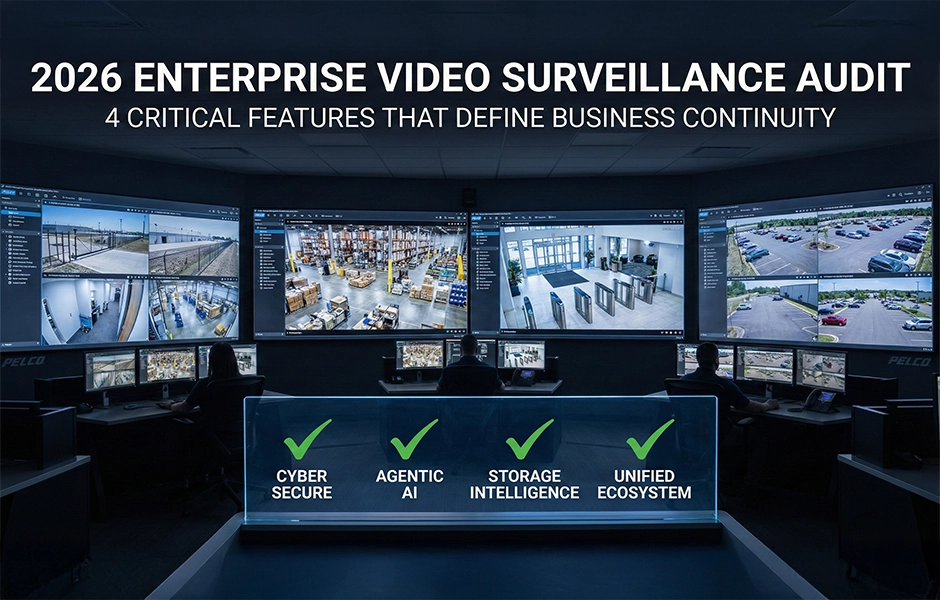
    The era of buying an enterprise video surveillance system as a “background facility tool” is over. We have entered the age of visual intelligence.

    According to the 2026 SIA Security Megatrends, software has officially “eaten the world,” and the industry is now grappling with an even bigger question: Will AI eat software?

    For organizations managing multiple locations, enterprise video surveillance systems now influence cyber risk, audit readiness, and long-term scalability. According to the 2024 Hiscox Cyber Readiness Report67% of organizations reported experiencing at least one cyber attack in the past 12 months, reinforcing the reality that connected systems, including network cameras and IoT endpoints, are now part of the enterprise threat surface. 

    This shift has changed how enterprise video surveillance systems should be evaluated. The conversation is no longer about megapixels or lens specifications. It is about questions such as the following:

    Is this system cyber-secured?

    Can it scale without becoming difficult to manage?
    Will it stand up to audits and compliance checks over time?

    So how should enterprises actually evaluate an enterprise video surveillance system in 2026?

    Cybersecurity as a baseline, not a feature

    Cybersecurity a baseline feature

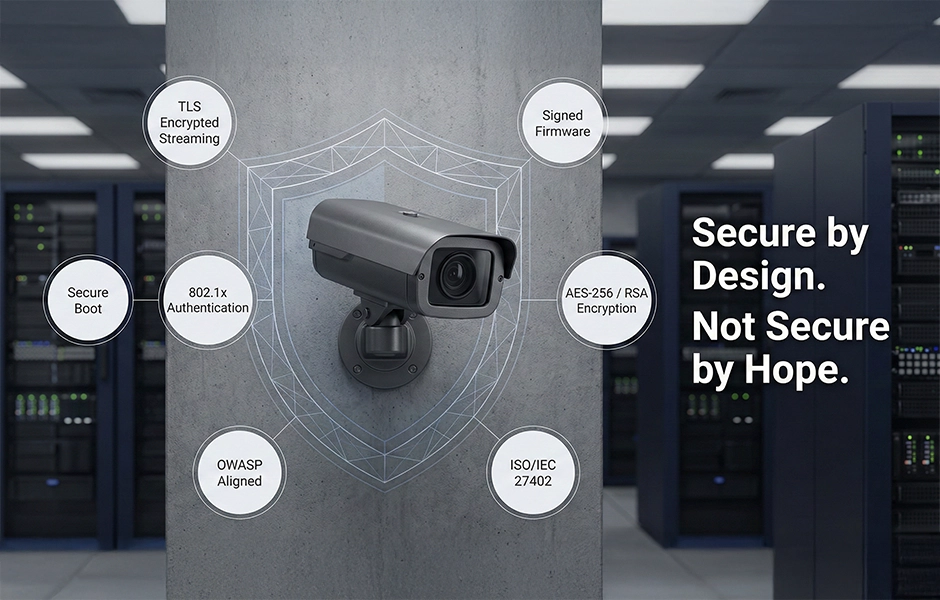
    Gone are the days when an enterprise video surveillance system was just a passive observer. Every camera is a potential doorway into your entire business network. If that door is weak, it doesn’t matter how strong your main firewall is—hackers will just climb in through the window. A hacker will own that device and use it as a launchpad to jump sideways into your payroll system. We must treat security cameras with the same rigor as an employee’s laptop—moving from “hoping it’s safe” to “proving it’s safe.”

    That proof isn’t found in a datasheet claim; it is found in rigorous third-party validation. Today, baseline trust is established only through compliance with global norms like OWASP, ISO/IEC 27402, and certifications such as STQCBefore a device touches your network, it must demonstrate this “Secure by Design” architecture through tangible technical defenses: Signed firmware that rejects malicious updates, encrypted video streaming (HTTPS/TLS) that prevents eavesdropping, and 802.1x authentication that ensures only authorized hardware can communicate with your server.

    The Rise of “Agentic AI”: From Detection to Prevention

    Detection to Prevention

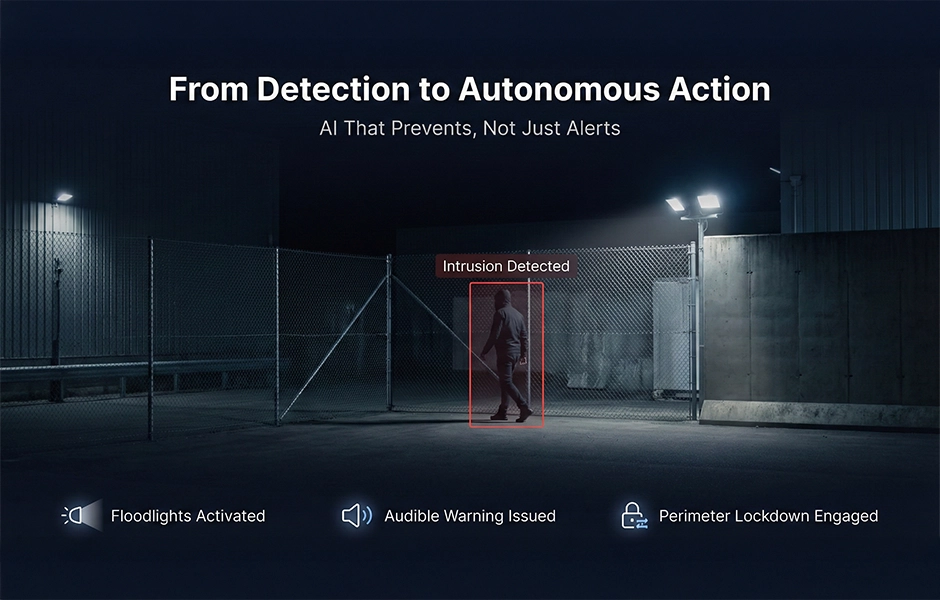
    For years, the industry promised AI that could “detect” anomalies. In 2026, detection is the bare minimum. The new standard is “Agentic AI”—autonomous systems capable of interpreting data, making decisions, and executing complex workflows without human intervention.

    In practice, this means moving from a system that merely watches to an enterprise video surveillance system that works. Consider the “Invisible Intruder” scenario: instead of simply flagging a 3:00 AM perimeter breach for a drowsy guard to verify, Agentic AI instantly validates the tripwire violation against shift schedules, triggers floodlights to stun the intruder, and broadcasts an automated audio warning—all while simultaneously locking internal access doors to contain the threat before a human operator even sees the alert.

    The “Return on Security” (RoS): Storage Intelligence

    Smart and Scalable Storage

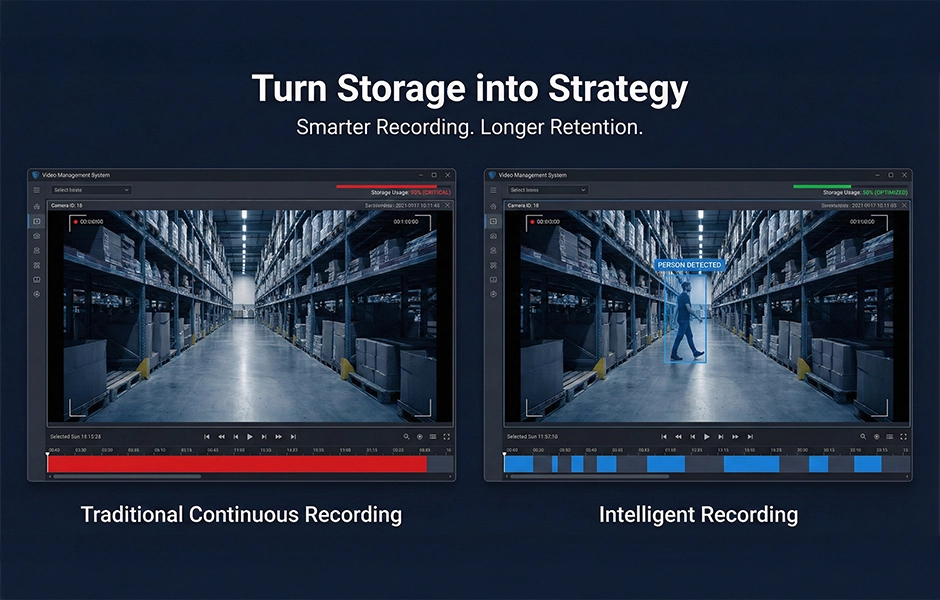
    The RoS mandate demands a shift from treating video storage as a passive expense to approaching it as a strategic asset. Across the enterprise video surveillance system industry, modern systems are adopting advanced technologies like AI-powered encoding, dynamic GOP (Group of Pictures) control, object-based compression, and background-invariant recording—each designed to reduce storage consumption without compromising forensic clarity. These innovations ensure that only critical details (like faces, license plates, or moving objects) are captured at full fidelity, while redundant or static data is heavily compressed. 

    Network cameras build on this foundation with proprietary techniques such as H.265+ compression, smart streaming, region of interest (ROI) encoding, and adaptive streaming, which intelligently reduce frame rates and bitrates during inactivity. Together, these technologies can slash storage costs by up to 50%, delivering high-retention, high-quality surveillance without the burden of bloated archives.

    The “One-Logo” Imperative: Ending Integration Hell

    The Video Surveillance System One Ecosystem

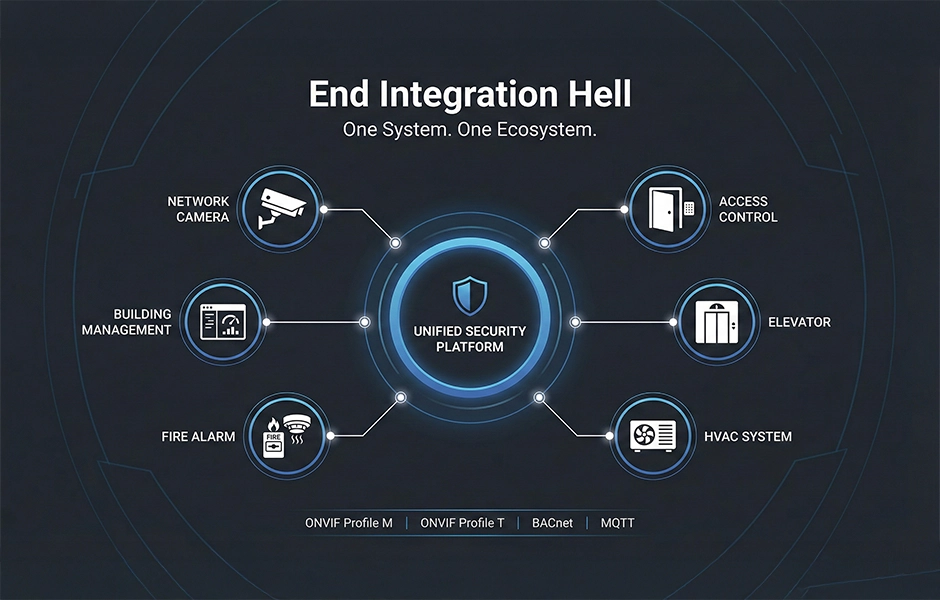
    For years, enterprises endured the chaos of “Integration Hell”—managing disconnected systems for video, access, and facility controls that couldn’t communicate. In 2026, that fragmentation is no longer acceptable. Security infrastructure is now expected to act as a unified nervous system, natively connecting with HVAC, fire panels, elevators, and building management systems (BMS) through standard protocols like BACnet and Message Queuing Telemetry Transport (MQTT). Features like emergency overrides and zone-based lockdowns must respond in sync across the entire facility—without the need for expensive middleware or complex custom scripting.

    The shift toward this “unified ecosystem” is driven by standardized open interoperability. The modern mandate is a system that strictly adheres to ONVIF Profile M (for AI metadata) and Profile T (for advanced streaming). This ensures that cameras are no longer proprietary “bricks” but rather intelligent sensors capable of feeding rich metadata—such as object classification and thermal signatures—into any compliant Video Management Software (VMS) or hybrid-cloud dashboard. By prioritizing an API-first architecture, organizations can finally treat their security hardware as a flexible, long-term asset that evolves alongside their operational needs.

    The Final Verdict: Choosing a Video Surveillance Partner, Not Just a Product

    In 2026, the question isn’t “Which camera has the highest resolution?” It is “Which ecosystem guarantees business continuity?” As AI and cyber threats rise, the best video surveillance system is the one that evolves with you. It must turn storage from a cost into an asset. It must shift you from passive recording to active prevention. And most importantly, it must break the silos between security and facility operations.

    The future belongs to the unified. Whether you are scaling to ten locations or a thousand, success requires an ecosystem engineered for growth. Techfonet stands ready to deliver this. We ensure your security infrastructure is not just a tool—it is a strategic advantage. Connect with our experts now!

    Mobile Signal Booster Service

    Mobile Signal Booster Service

    Elevate Your Mobile Connectivity with Techfonet’s Mobile Signal Booster Service.

    In today’s fast-paced world, staying connected is not just a luxury; it’s a necessity. Whether it’s for managing business operations, ensuring seamless communication in emergencies, or simply staying in touch with loved ones, a robust mobile signal is crucial. However, weak signal strength, dropped calls, and slow data speeds are common issues faced by many, especially in areas with poor cellular coverage. This is where Techfonet steps in, offering a comprehensive mobile signal booster service designed to keep you connected, always.

    Tailored Solutions for Every Need

    At Techfonet, we understand that connectivity needs vary greatly across different environments. That’s why our Mobile Signal Booster Service is meticulously crafted to cater to a diverse range of requirements:

    • For Building Structures: Experience enhanced signal strength in office buildings, residential areas, and commercial spaces with our Stella Office Repeater Range and iRepeater Booster. Our solutions are designed to support large buildings and residences, ensuring every corner is covered.
    • For Vehicles: Stay connected even on the move with our Router Amp Drive. Ideal for individuals and businesses alike, this booster ensures that your calls and data services remain uninterrupted during your travels.
    • For Marine Applications: With the Router Amp and iRepeater Marine, weak signals are a thing of the past, even in the middle of the ocean. Our marine boosters are engineered to provide stable and strong connectivity for all your maritime needs.
    • For Large Open Spaces: Our specialized boosters for large open spaces ensure that your outdoor events, agricultural sites, and remote areas have the coverage they need, eliminating dead zones and enhancing signal strength across vast areas.

    Types of mobile signal boosters and Mobile Signal Booster ServiceCutting-Edge Technology

    Techfonet’s Mobile Signal Boosters are equipped with the latest in signal boosting technology. Our range includes Dual Band, Tri-Band, Four Band, and Five Band options, ensuring compatibility and optimal performance across all cellular networks and frequencies. Whether it’s GSM, 3G, 4G, or the latest 5G networks, our boosters are designed to deliver.

    Comprehensive Installation Accessories

    To complement our signal boosters, we offer a full suite of installation accessories, including Laser Antenna, Omni Antenna Flat, Panel Antenna, Yagi antenna, and more. These accessories ensure that your signal booster is set up for maximum efficiency, tailored to the specific challenges of your location.

    Professional Installation Service

    Techfonet doesn’t just provide the tools; we offer a complete solution. Our professional installation service ensures that your Mobile Signal Booster is installed and optimized by experts. From site assessment to system deployment, our team handles every step with precision and care, ensuring you get the most out of your investment.

    Stay Connected with Techfonet

    At Techfonet, we’re committed to breaking down the barriers to connectivity. Our Mobile Signal Booster Service is more than just a product; it’s a promise of uninterrupted communication, ensuring you’re always connected when it matters most. With Techfonet, weak signals, dropped calls, and slow data speeds are a thing of the past. Experience the peace of mind that comes with reliable, enhanced connectivity. Choose Techfonet for a connected future.